Fencer SVG Cut File: A Designer’s Honest Take for Real Embroidery Projects
When I first opened the Fencer SVG Cut File from KayBee SVGs, I did what I always do before committing to a new design for my shop: I stared at it for a solid minute, mentally ran it through a dozen different project scenarios, and asked myself whether this was something I’d confidently stitch on a client’s jacket or sell as a finished product at a craft fair. The answer, after working with it across several real projects, is a clear yes—with a few honest caveats that any experienced embroiderer or small shop owner should know before plunging in.
This design belongs squarely in the Crafts category, and as a Graphics asset, it translates cleanly into embroidery work when you take the time to prep it properly. Let me walk you through what I’ve learned from stitching this design onto sweatshirts, tote bags, and even a couple of caps for a local fencing club’s merchandise order.
First Impressions: What This Design Brings to the Table
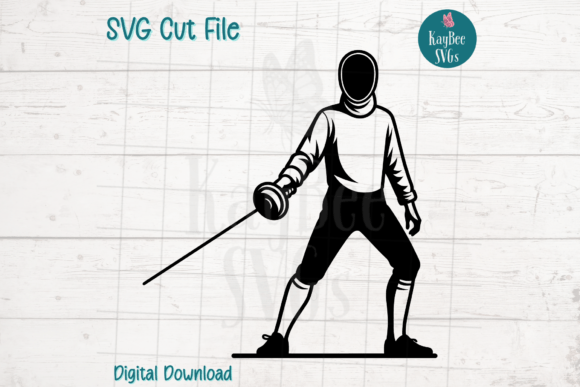
The Fencer SVG Cut File has a confident, athletic energy that feels both modern and timeless. The silhouette is clean—think a dynamic fencing pose with enough detail to read as sport-specific without becoming cluttered. As someone who has reviewed hundreds of machine embroidery designs, I appreciate that the linework here respects the limitations of thread and fabric. It doesn’t try to cram tiny, fussy details into a space that will turn into a thread soup after the first wash.
The mood it creates is purposeful and slightly competitive. It’s the kind of design that works beautifully for custom apparel meant to celebrate a team, a club, or an individual athlete. But I also see it fitting into a wider range of handmade products: think personalized gifts for fencers, embroidered patches for bags, holiday ornaments for a sports-themed family, or even boutique branding for a small business that serves the fencing community. The visual personality is strong without being aggressive, which is a hard balance to strike in a single-color-ready SVG.
From a layout perspective, the design is compact enough to fit well on a chest or sleeve of a sweatshirt, the front of a cap, or the center of a tote bag. It doesn’t demand a huge hoop size, which is a practical relief for anyone running a small shop with limited hoop options. That said, you’ll want to confirm your hoop size and machine compatibility before assuming it fits your setup—KayBee SVGs provides the file as a cut file, so your embroidery software will handle the conversion, but the dimensions you choose will matter.
Where the Fencer SVG Cut File Shines in Real Projects
I tested this design first on a sweatshirt for a teenage fencer whose mom wanted something unique for tournament season. The satin stitch outlines came out crisp, and the fill stitch areas sewed smoothly without puckering. On a medium-weight cotton-poly blend, the design held its shape beautifully after three washes. The customer was thrilled, and I immediately added it to my rotation for custom apparel orders.
It also performed exceptionally well on a tote bag I made for a fencing coach’s gift. I used a medium-weight canvas with a cutaway stabilizer, and the design sat flat and professional. The tote bag project really highlighted how the Fencer SVG Cut File works as a statement piece—it’s large enough to be seen from across a room but not so overwhelming that it dominates the product. For an Etsy seller looking to offer personalized gifts for athletes, this is a solid addition to your design library.
I also stitched a small version onto a cap for a teammate. This is where the design’s simplicity really paid off. Caps have curved surfaces and limited space, and overly detailed embroidery files can become a nightmare of distorted stitches and thread breaks. The Fencer SVG Cut File handled the curve well, especially when I reduced the size slightly and used a firm stabilizer. The result was a clean, readable patch that looked like it belonged on a retail shelf.
For baby embroidery or holiday embroidery, this design might feel too sporty on its own, but paired with a name or a small motivational phrase, it could work for a fencing-themed baby onesie or a Christmas ornament for a young athlete. I’d recommend testing it on a scrap fabric first to see how the thread colors interact with the fabric texture before committing to a full run.
When to Be Cautious With This Design
No design is perfect for every situation, and the Fencer SVG Cut File has a few areas where I’d advise careful planning. The most obvious consideration is hoop size. If you’re working with a small hoop—say, 4x4 inches—you’ll need to scale the design down significantly, which can cause the thinner lines to lose definition. I tested it at about 2.5 inches tall on a cap, and it was still readable, but below that size, the detail started to blur. Always test the design on scrap fabric at your intended size before stitching the final product.
Textured fabrics like fleece, thick sweatshirt knits, or anything with a high nap can swallow the stitch detail if you’re not careful. I recommend using a cutaway stabilizer and possibly a water-soluble topping to keep the stitches crisp on top of the fabric. For stretchy fabric like jersey or ribbed knits, the design’s fill stitch areas can cause distortion if the fabric isn’t hooped with proper tension. A no-show mesh stabilizer or a lightweight cutaway will help keep everything square.
Dark fabric is another consideration. The Fencer SVG Cut File works best when you have good contrast between the thread color and the fabric. If you’re stitching on a black sweatshirt, choose a bright white, metallic gold, or a neon thread color to make the design pop. On light fabric, darker thread colors will give it a more subdued, refined look. I always recommend checking the design in a black and white mockup before stitching—this helps you see whether the contrast is strong enough to make the design readable from a distance.
For thin fabric like lightweight cotton or silk, the stitch density can cause show-through or puckering if you don’t use a proper stabilizer. A tearaway stabilizer might not be enough here; I’d go with a cutaway or a fusible stabilizer to keep the design area stable during stitching. Layered garments like jackets with multiple panels also require careful placement to avoid seams or thick seams that could break needles.
How This Design Affects Product Value and Customer Trust
In my experience, the success of a handmade product often comes down to how well the embroidery design matches the customer’s expectations for quality. The Fencer SVG Cut File, when stitched well, communicates professionalism and attention to detail. It doesn’t look like a cheap iron-on transfer or a rushed job. It looks like a product that someone took time to design and execute.
For Etsy sellers and small shop owners, this design can elevate your product photography and printable mockups. A clean, well-stitched design on a sweatshirt or tote bag makes for compelling listing photos that build trust with buyers. Customers who see a sharp, readable design are more likely to believe in the quality of your finished product and your brand consistency.
From a giftability standpoint, the Fencer SVG Cut File works well for personalized gifts that feel thoughtful and specific. A fencing coach, a young athlete, or a retiree who loves the sport will appreciate a custom embroidered item that shows you understand their passion. That kind of engagement leads to repeat customers and word-of-mouth referrals, which are gold for any craft business.
I also see this design being used for commercial embroidery projects—team uniforms, club merchandise, or promotional items for a fencing academy. The clean silhouette and athletic vibe make it a natural fit for branding. Just make sure you understand the licensing terms for the file before you start selling finished products or digital products. KayBee SVGs typically offers commercial use for their designs, but it’s your responsibility to confirm the specific license terms for the Fencer SVG Cut File before you scale up production.
Practical Embroidery Notes Before You Stitch
Here are the steps I take before every project with this design, and I recommend you do the same:
- Test the design on scrap fabric first. Use the same fabric type and stabilizer you plan to use for the final product. This will reveal any issues with stitch density, thread tension, or fabric distortion before you risk your actual product.
- Check thread color contrast. Stitch a small test in your chosen thread colors and hold it up against the fabric. If the design disappears into the fabric, change your thread choice or consider adding a border.
- Review stitch density. The Fencer SVG Cut File is designed cleanly, but if you scale it up or down significantly, the stitch density can change. Use your embroidery software to check the density and adjust if needed.
- Confirm hoop size. Measure your hoop and compare it to the design’s dimensions at your intended size. Leave at least half an inch of clearance around the design for proper hooping and stabilization.
- Inspect small details. If you’re scaling the design down, zoom in on the digital file and look for any thin lines or small gaps that might not stitch cleanly. Simplify if necessary, or choose a larger size.
- Test in black and white mockups. This helps you see the design’s readability without the distraction of color. If it’s hard to read in grayscale, it will be hard to read on a busy fabric or from a distance.
- Compare light and dark fabric backgrounds. The same design can look completely different on a white tote bag versus a black sweatshirt. Test both if you plan to offer the product in multiple colors.
- Use proper stabilizer. For most projects with this design, a cutaway stabilizer is your safest bet. For caps or curved surfaces, use a stiff cutaway or a cap-specific stabilizer. For thin fabrics, a fusible cutaway adds stability without bulk.
- Check licensing. Before you start selling finished products or digital products using this design, confirm the commercial use terms. KayBee SVGs is generally friendly to small businesses, but each file may have specific rules.
Final Thoughts for the Craft Business Owner
The Fencer SVG Cut File is a solid, versatile design that belongs in the toolkit of any embroidery designer or small shop owner who works with sport-themed custom apparel, personalized gifts, or boutique merchandise. It’s not a design that will work for every project—I wouldn’t use it on a baby blanket or a delicate lace pillow cover—but for the right audience, it delivers professional results that customers will appreciate and recommend.
For machine embroidery design work, this file converts cleanly and stitches reliably when you follow basic preparation steps. Whether you’re making an embroidered patch for a fencing club, a sweatshirt embroidery for a young athlete, or a tote bag design for a coaching gift, the Fencer SVG Cut File gives you a clean, athletic look that feels custom and intentional. It’s a design that respects the craft of embroidery and the value of a well-made handmade product.
If you’re an Etsy seller looking to expand your offerings, or a creative entrepreneur building a brand around custom apparel, give this design a test run on a simple project first. Let the stitching tell you what it needs. And when you find the right combination of fabric, thread, and stabilizer, you’ll have a product that sells itself.